Wenlong Mou (牟文龙)
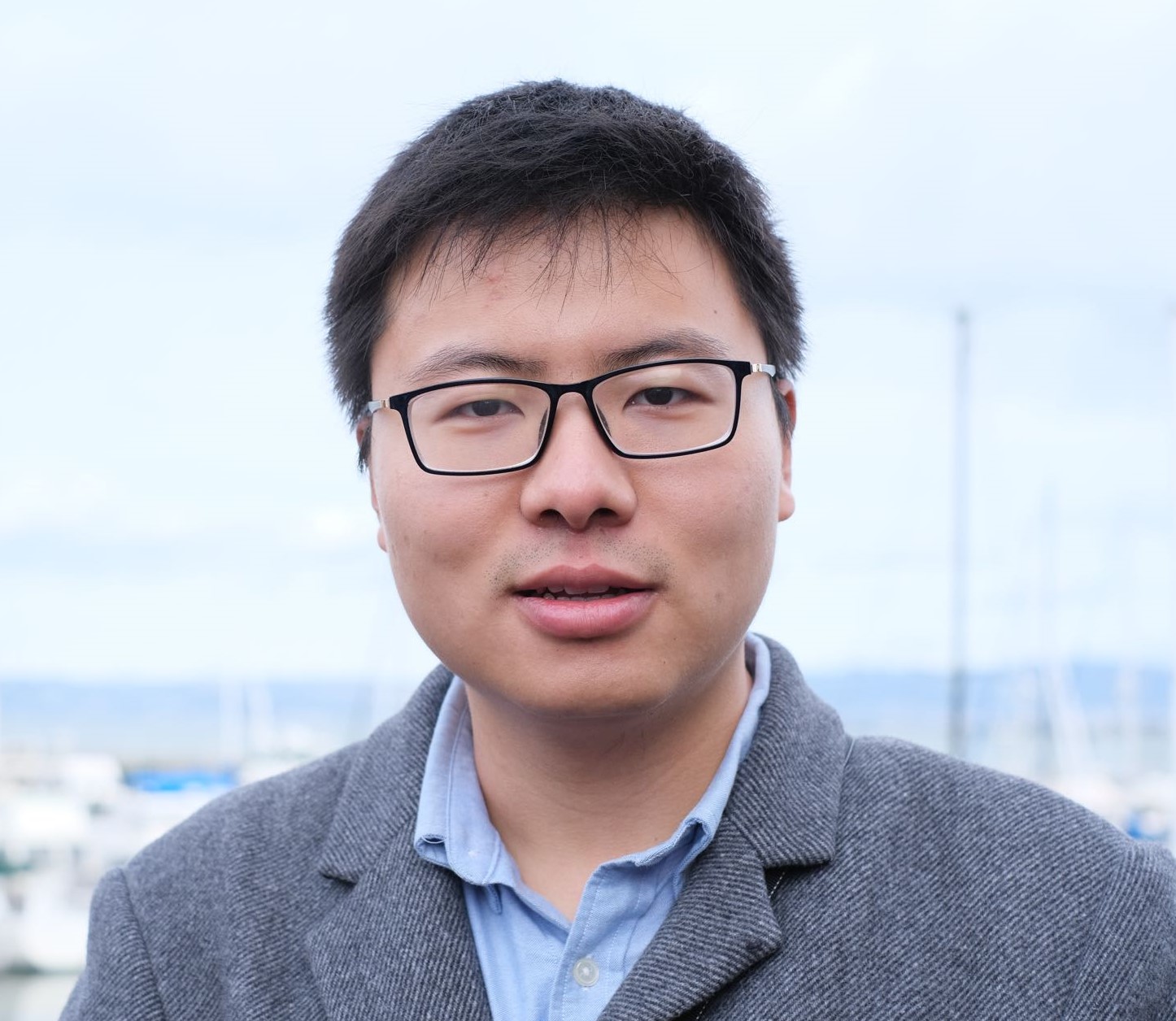 |
Assistant Professor, |
About me
Welcome to my homepage! I am an Assistant Professor at the Department of Statistical Sciences, University of Toronto. I recently obtained my Ph.D. from the Department of EECS, UC Berkeley, where I was very fortunate to be advised by Prof. Martin Wainwright and Prof. Peter Bartlett. Prior to Berkeley, I received B.S. in Computer Science from Peking University in 2017, where I was very fortunate to work with Prof. Liwei Wang.
Research
I work on the interplay between AI and dynamics. This includes AI for concrete scientific/engineering problems in physical systems, and the dynamics of learning algorithms. For AI4S applications, I work on:
Reinforcement learning for control of complex physical systems, such as plasma control for fusion energy, and control of quantum systems.
AI agents and machine learning methods for reduced-order modeling and numerical simulation of partial differential equations.
For theoretical foundations, I work on:
Post-training optimization and test-time adaptation of modern generative models, including diffusion models and large language models.
Reinforcement learning theory and algorithms with function approximation. The effect of PDE and dynamics structure on the fundamental possibilities of RL algorithms.
Incorporation of modern machine learning in causal inference.
Recruiting
I am actively seeking Ph.D. students. Please see the post for detailed information. If you are interested in collaborating with me, please don't hesitate to reach out. However, please be aware that I receive a high volume of emails daily, which may lead to some delays in my response. Your patience in this regard is greatly appreciated. Thank you.
News
Oct 2026, New paper introducing GAV, a scientific experimentation environment that generates verifiable PDE problems and provides numerical feedback to help coding agents develop and improve PDE programs.
Sep 2026, four papers accepted to NeurIPS 2026. They study adaptive zeroth-order optimization with directional hints; online imitation learning to stabilize Vlasov–Poisson plasmas; reward-tail-guided search to predict and improve test-time scaling; and post-training for best-of-N test-time performance.
Sep 2026, Our paper on decorrelation-based regression adjustment in randomized experiments was accepted to Journal of the Royal Statistical Society: Series B (JRSSB).
May 2026, New paper on plasma control via imitation learning.
May 2026, New paper on post-training optimization based on test-time scaling laws.
May 2026, Paper on RL with action-triggered observations accepted to ICML 2026.
Apr 2026, New paper on stochastic approximation with decision-dependent Markovian noise.
Feb 2026, New paper on test-time scaling laws.
Feb 2026, New paper on continuous-time reinforcement learning.
Nov 2025, Paper selected as an oral presentation at NeurIPS 2025 workshop on dynamics.
Oct 2025, Paper on continuous-time policy evaluation accepted to SIAM Journal on Mathematics of Data Science.
Oct 2025: New paper on RL with action-triggered observations.